Chunxins Blog

Linearanleitung

Heim

Linearanleitung

  • So wählen Sie die beste Lösung für Präzisionsbewegungssysteme aus Mar 07, 2025
    Als Kernübertragungskomponente für industrielle Automatisierung und Präzisionsgeräte die Auswahl von lineare Führer steht in direktem Zusammenhang mit der Genauigkeit, Effizienz, Leben und Stabilität der Ausrüstung. In diesem Artikel werden Ingenieuren eine systematische Auswahlreferenz aus den Aspekten der Auswahlprinzipien, wichtigen Parameter, Schritte und Vorsichtsmaßnahmen in Kombination mit tatsächlichen Anwendungsszenarien zur Verfügung gestellt.Analyse der Schlüsselparameter vor der Auswahl1. Belastungskapazität und RichtungLasttyp: Es ist notwendig, die statische Belastung (vertikale und laterale Kraft) und die dynamische Belastung (Trägheitskraft durch Beschleunigung) zu klären, die von der Ausrüstung getragen werden.Lastrichtung: Lineare Guides können normalerweise Vier-Wege-Lasten standhalten, aber das Raceway-Layout und die Schiebereglerverteilung der Führer müssen gemäß der tatsächlichen Kraftrichtung ausgewählt werden.Drehmomentbilanz: Der Schwerpunkt und das Drehmoment müssen in komplexen Anwendungen berechnet werden, um eine Verformung oder eine verkürzte Lebensdauer der Führer aufgrund einer ungleichmäßigen Kraft zu vermeiden.2. GenauigkeitsniveauWählen Sie den gewöhnlichen Niveau (± 50 μm), den Präzisionsniveau (± 10 & mgr; m) oder den ultrahochen Präzisionsniveau (± 5 μm) gemäß den Anwendungsanforderungen aus. Beispielsweise erfordert die Halbleiterausrüstung eine Positionierungsgenauigkeit auf Nanometerebene, und es sollten ultrahohe Präzisionsführer ausgewählt werden.3. Guide Typ und MaterialTypauswahl:Rollführung (Ball/Roller): Niedrige Reibung, hohe Geschwindigkeit, geeignet für die Hochgeschwindigkeitsverarbeitung und Präzisionspositionierung.Gleitführung: Starke tragende Kapazität, geeignet für Szenarien mit schwerer Lade und niedriger Geschwindigkeit.Materialanpassung:Kohlenstoffstahl: hohe tragende, geeignete für die schwere Industrie;Edelstahl: Korrosionsresistent, geeignet für feuchte oder korrosive Umgebungen;Aluminiumlegierung: Leicht, geeignet für medizinische Geräte oder Lichtlastszenarien.4.. Umweltanpassungsfähigkeit Umgebungen wie hohe Temperatur, Luftfeuchtigkeit, Staub oder korrosive Medien erfordern hochtemperaturbeständige Beschichtungen, versiegelte staubfeste Designs oder spezielle Schmierunglösungen.  Auswahlschritte für lineare Handbuch1. Klare AnforderungenBestimmen Sie die Bewegungsgeschwindigkeit, Beschleunigung, Hublänge und Installationsraumlimit des Geräts28.2. Berechnen Sie Last und LebenBerechnen Sie die Belastungskapazität der Anleitung gemäß der Lastformel (z. B. statische Last und dynamische Nennlast) und beziehen Sie sich auf die vom Hersteller bereitgestellte Lebensdauer -Berechnung, um den Wartungszyklus zu bewerten.3. Wählen Sie die Handbuchspezifikationen ausFührungsbreite: Je breit die Breite ist, desto stärker die Starrheit und die Belastungskapazität. Häufige Spezifikationen betragen 15 bis 45 mm.Vorspannung: Keine Vorspannung, leichte Vorspannung, mittlere Vorspannung oder schwere Vorspannung. Je höher die Vorspannung, desto stärker die Steifigkeit, aber der Reibungswiderstand nimmt zu.4. Schmier- und WartungsdesignWählen Sie ein zentrales Schmiermittel oder ein selbstschmierendes System, reinigen Sie regelmäßig Staub und fügen Sie Fett hinzu, um den Verschleiß zu verringern. Typische Anwendungsszenarien und Auswahlfälle1. CNC -WerkzeugmaschinenAnforderungen: Hohe Wiederholbarkeit (± 5 μm), hohe Starrheit.Auswahl: Ultrahohe Precision Roller Guide, Kohlenstoffstahl, schweres Vorspannungsdesign mit geschlossenem Feedback-System.2. IndustrieboterAnforderungen: Flexible Bewegung mit mehreren Freiheitsgraden, Widerstand gegen häufigen Start und Stopp.Auswahl: Guide mit niedriger Reibungskugel, Edelstahl, staubdichtes Dichtungsstruktur.3.. HalbleiterausrüstungAnforderungen: Positionierung auf Nanoebene, Widerstand gegen die saubere Raumumgebung.Auswahl: Luftranieranleitung oder Magnetsuspensionshandbuch, Ultrahohe-Präzisionsgrad, staubfreie Schmierlösung.Häufige Missverständnisse und Vorsichtsmaßnahmen in der AuswahlIgnorieren Sie den Einfluss der dynamischen Last: Die Berücksichtigung einer statischen Belastung kann dazu führen, dass die Anleitung aufgrund einer Trägheitskraftüberlast während der Hochgeschwindigkeitsbewegung fehlschlägt.Übermäßige Streben nach hoher Präzision: Die Verwendung von ultrahoch-hohen Präzisionsführern in nicht-spezifischen Szenarien erhöht die Kosten, und gewöhnliche Noten können den Anforderungen entsprechen.Unzureichende Umweltanpassung: Das Versäumnis, Schutzdesign für Staub oder korrosive Umgebungen auszuwählen, verkürzt die Lebensdauer des Leitfadens stark.Unsachgemäße Installation und Wartung: Eine unzureichende Anpassung der Vorspannung oder des Mangels an Schmierung wirkt sich direkt auf die Bewegungsgenauigkeit und -stabilität aus.ZusammenfassungDie Auswahl der linearen Leitfäden muss umfassend mehrere Faktoren wie Last, Genauigkeit, Umgebung, Kosten usw. berücksichtigen und sie flexibel an die tatsächlichen Anwendungsszenarien einstellen. Durch wissenschaftliche Berechnung, angemessene Übereinstimmungsparameter und regelmäßige Wartung können die Leistung der Führer maximiert und die Lebensdauer der Geräte verlängert werden. Es wird empfohlen, zu Beginn der Auswahl vollständig mit Lieferanten und Ingenieuren zu kommunizieren und professionelle Tools (z. B. Software für Lastberechnung) zu verwenden, um die Lösung zu optimieren, um ein Gleichgewicht zwischen Effizienz und Zuverlässigkeit zu gewährleisten.Wenn Sie mehr über bestimmte Modellparameter oder Anwendungsfälle erfahren müssen, können Sie sich auf das vom Hersteller bereitgestellte Auswahlhandbuch oder technische Dokumente beziehen.
  • Entwicklungstrend von Linearführungen
    Entwicklungstrend von Linearführungen Apr 11, 2025
    Als Schlüsselkomponente der Präzision Linearbewegungssysteme, die Entwicklung von Linearführungen In den nächsten drei Jahren wird es vor allem um die Modernisierung der High-End-Produktion, die explosionsartige Zunahme der Nachfrage nach intelligenten Technologien und die Vertiefung industrieller Anwendungen gehen. Nanjing Chunxin hat mit der Entwicklung intelligenter Linearführungsprodukte begonnen. Im Folgenden finden Sie eine detaillierte Analyse der wichtigsten Entwicklungstrends:1. Richtung des Technologie-Upgrades(1) Höchste Präzision und SteifigkeitWiederholgenauigkeit auf Nanoebene: Die Nachfrage nach Halbleiterausrüstung (wie Fotolithografiemaschinen) und optischen Prüfinstrumenten treibt die Führungsschiene Genauigkeit zu ±0,1μm, Dies wird durch die Optimierung des Laufbahnschleifprozesses und die adaptive Vorspannungseinstellung erreicht.Hochleistungsdesign mit hoher Steifigkeit: Hochleistungsbereiche wie die Verarbeitung von Windturbinenblättern erfordern Führungsschienen mit einer statischen Steifigkeit von mehr als 500 N/μm, die eine parallele Struktur mit mehreren Gleitern und ein verbessertes Rollendesign verwenden.(2) Hohe Geschwindigkeit und geringe ReibungDie Geschwindigkeit übersteigt 5 m/s (z. B. bei Verpackungsmaschinen), wobei auf Keramikkugeln und selbstschmierender Beschichtungstechnologie (z. B. PTFE-Verbundfolie) zurückgegriffen wird und der Reibungskoeffizient auf unter 0,001 reduziert wird.(3) Intelligente IntegrationIntegrierte Sensorschienen: Echtzeitüberwachung von Belastung, Vibration, Temperatur und Rückmeldung des Verschleißzustands durch Edge Computing (wie etwa „Smart Rails“ von THK).Selbsteinstellendes System: KI-Algorithmus passt die Vorspannung dynamisch an und kompensiert thermische Verformungen (besonders geeignet für hochpräzise Werkzeugmaschinen). 2. Innovation bei Materialien und HerstellungsprozessenLeichte Materialien: Schienenskelett aus Aluminiumlegierung (30 % Gewichtsreduzierung) + Keramikkugeln, verwendet in Szenarien wie Drohnenservos.Korrosionsbeständiger Spezialstahl: Molybdänhaltiger Edelstahl oder eine Oberflächennitrierungsbehandlung werden in Schiffen und chemischen Umgebungen verwendet und die Lebensdauer wird um das Dreifache erhöht.Anwendungen der additiven Fertigung: 3D-Druck komplexer Schienenendkappen, integrierter Ölkreisläufe und Sensorschlitze (wie beispielsweise die Directed Energy Deposition-Technologie von Siemens). 3. Explosionspunkt der IndustrieanwendungNeues Energiefeld: Stapelausrüstung für Leistungsbatteriemodule: Schienen müssen staubdicht (IP67) + hochgeschwindigkeitsfähig (2 m/s) + langlebig (10 Jahre wartungsfrei) sein.Photovoltaik-Silizium-Wafer-Schneidemaschine: Die Nachfrage nach staubdichten Schienen ist stark gestiegen und das Marktvolumen könnte im Jahr 2025 800 Millionen US-Dollar übersteigen.Halbleiter- und Panelherstellung: Schienen mit Vakuumumgebung (keine ausgasenden Materialien) werden für Wafer-Handling-Roboter verwendet. Die weltweite Nachfrage dürfte bis 2026 um 25 % steigen.Medizinische Roboter: Mikroschienen (Breite ≤ 15 mm) werden für chirurgische Roboterarme verwendet und müssen MRT-kompatibel sein (nicht magnetische Materialien wie Titanlegierungen). 4. MarktwettbewerbsmusterDie inländische Substitution beschleunigt sich: Chinesische Hersteller (wie Guangdong Kate, Nanjing Technology und Nanjing Chunxin) werden ihren Marktanteil bei kleinen und mittelgroßen Schienen von 35 % im Jahr 2023 auf 50 % im Jahr 2026 steigern, der High-End-Markt wird jedoch immer noch von HIWIN und THK dominiert.Kostenwettbewerbsstrategie:Durch die Produktion im großen Maßstab sinkt der Preis für Produkte der mittleren Preisklasse um 10–15 %.Durch die modulare Bauweise (z. B. integrierte Führungsschienen und Antriebsmotor-Kits) werden die Montagekosten für den Kunden gesenkt. 5. Integration neuer TechnologienBetrieb und Wartung digitaler Zwillinge: Erstellen Sie anhand von Daten zum Schienenbetrieb ein Lebensdauervorhersagemodell, um ungeplante Ausfallzeiten um mehr als 50 % zu reduzieren. 6. Zusammenfassung und VorschlägeDie Kernwettbewerbsfähigkeit von Linearführungen wird sich in den nächsten drei Jahren in folgenden Bereichen widerspiegeln:Szenariobasierte Innovation (wie explosionsgeschützte Anleitungen für Lithiumbatterie-Werkstätten und saubere Anleitungen für biologische Labore).Intelligente Durchdringung (Upgrade von einem einzelnen beweglichen Teil zu einem „Wahrnehmungs-Entscheidungs“-Terminal).Zusammenarbeit in der Industriekette (gemeinsamer Aufbau eines Ökosystems mit Herstellern von Servomotoren und Steuerungen). Wenn Sie auf der Suche nach hochwertigen Produkten sind, besuchen Sie unsere Website unter www.chunxinauto.com um weitere Produktinformationen zu erhalten. Wir freuen uns auf die Zusammenarbeit mit Ihnen, um gemeinsam ein neues Kapitel der Kreativität aufzuschlagen. Wenn Sie an diesem Artikel interessiert sind, können Sie uns unter folgender Adresse kontaktieren:WhatsApp oder WeChat+86 17372250019
  • Sind Linearführungen anfällig für Rost? Korrosionsbeständig und wasserfest! Oct 21, 2025
    Normal Linearführungen In feuchten Umgebungen rosten sie häufig, was ihre Funktion beeinträchtigt. Dieser Artikel stellt eine neue korrosionsbeständige und „wasserdichte“ Führungsschienenlösung zum Schutz von Werkstätten mit hoher Luftfeuchtigkeit vor, beispielsweise in Reinigungs- und Aquakulturbetrieben. Versteckte Gefahren feuchter Umgebungen – Die Luftfeuchtigkeit in Reinigungsgeräten und Werkstätten zur Verarbeitung von Wasserprodukten liegt bei über 75 % und sie sind häufig Kühlmitteln und Wasser ausgesetzt. Gewöhnliche Führungsschienen rosten innerhalb eines Monats, was zum Verklemmen des Schiebers führt. Die Wartung erfordert das Entfernen von Rost und den Austausch von Zubehör, was hohe monatliche Wartungskosten verursacht.   Die Führungsschienen bestehen aus hochkorrosionsbeständigem Edelstahl 304 mit einer mehrschichtigen, verchromten Rostschutzbeschichtung. Sie haben den Salzsprühtest (500 Stunden) bestanden und zeigen keinerlei Anzeichen von Rost. Selbst bei längerem Kontakt mit Wasser und Kühlmittel bleiben sie glatt und rostfrei und eignen sich daher für feuchte und wassergefährdete Umgebungen.   Wenn Sie Bedarf haben, hinterlassen Sie eine Nachricht und senden Sie mir eine private Nachricht, um das korrosionsbeständige Musterbuch für Linearführungen zu erhalten. Ingenieure empfehlen Materialien basierend auf der Umgebungsfeuchtigkeit und dem Typ der Kontaktflüssigkeit!
  • Popularization Of Knowledge About Linear Guides
    Popularization Of Knowledge About Linear Guides Nov 21, 2025
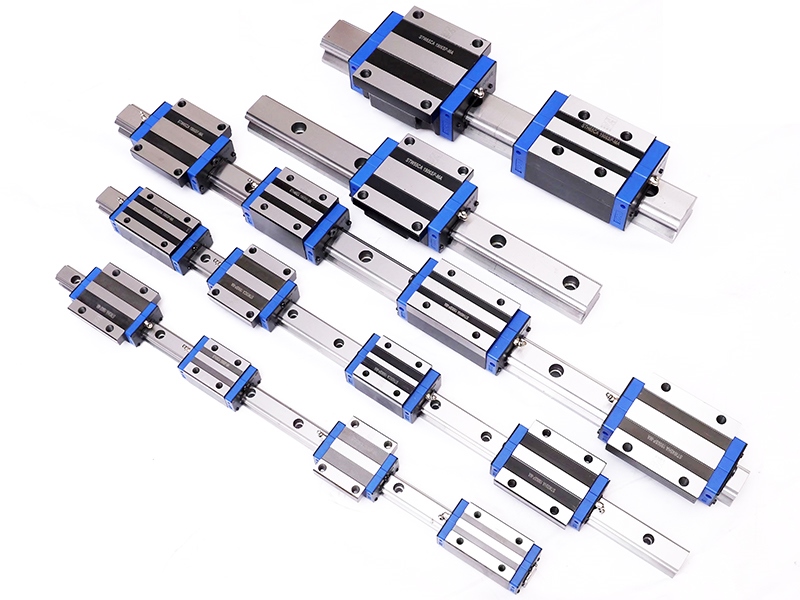
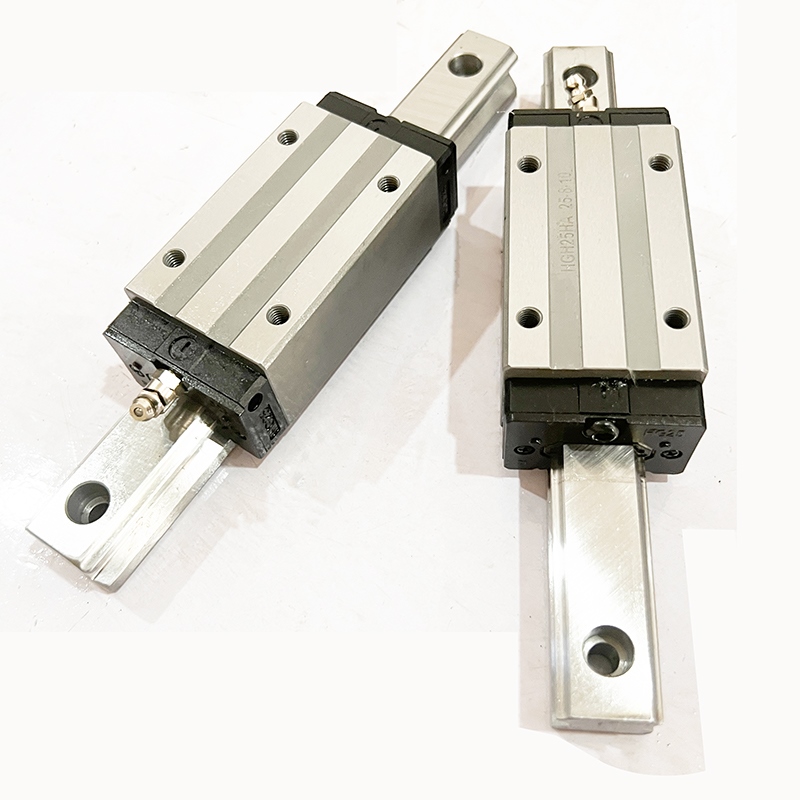
    【Linear guides】can be categorized into ball linear guides, roller linear guides, and wheel linear guides. They are used to support and guide moving parts, enabling them to perform reciprocating linear motion in a given direction. Based on the nature of friction, linear motion guides can be classified into sliding friction guides, rolling friction guides, elastic friction guides, and fluid friction guides.   1. Definition: Linear guides, also known as linear rails, slide rails, or linear guides, are used in linear reciprocating motion applications and can withstand a certain amount of torque, achieving high-precision linear motion under high loads.   2. Function: The function of linear guides is to support and guide moving parts, enabling them to perform reciprocating linear motion in a given direction. Linear bearings are mainly used in automated machinery, such as German-imported machine tools, bending machines, and laser welding machines. Of course, linear bearings and linear shafts are used in conjunction. Linear guides are mainly used in mechanical structures with high precision requirements. The moving and stationary elements of a linear guide do not require an intermediate medium; instead, rolling steel balls are used.   3. Working Principle: It can be understood as a rolling guide, where steel balls endlessly roll and circulate between the slider and the guide rail, allowing the load platform to move easily and linearly along the guide rail with high precision. This reduces the coefficient of friction to one-fiftieth of that of traditional sliding guides, easily achieving very high positioning accuracy. The end-unit design between the slider and the guide rail allows the linear guide rail to simultaneously bear loads in all directions (up, down, left, and right). The patented recirculation system and simplified structural design make HIWIN's linear guide rails have smoother and lower noise movement. The slider transforms the motion from a curve to a straight line. Like planar guide rails, linear guide rails have two basic components: a fixed component that acts as a guide, and a moving component. Since linear guide rails are standard components, for machine tool manufacturers, the only task is to machine a mounting plane and adjust the parallelism of the guide rail. The guide rail, acting as a guide, is made of hardened steel and is precision ground before being placed on the mounting plane. For example, a guide rail system that withstands both linear forces and overturning moments is significantly different in design from a guide rail that only withstands linear forces. Over time, the steel balls begin to wear, weakening the preload acting on them and reducing the motion accuracy of the machine tool's working parts. To maintain initial accuracy, the guide rail support, or even the guide rail itself, must be replaced. If the guide rail system already has a preload, and system accuracy has been lost, the only solution is to replace the rolling elements. The guide rail system is designed to maximize the contact area between the fixed and moving elements. This not only improves the system's load-bearing capacity but also allows it to withstand the impact forces generated by intermittent or heavy cutting, widely distributing the force and expanding the load-bearing area. To achieve this, guide rail systems use various groove shapes, with two representative types: Gothic (pointed arch) grooves, which are extensions of a semicircle with the contact point at the apex; and arc-shaped grooves, which serve the same purpose. Regardless of the structural form, the goal is the same: to maximize the contact radius of the rolling steel balls with the guide rail (fixed element). The key factor determining the system's performance characteristics is how the rolling elements contact the guide rail.   4. Application Areas: ① Linear guides are mainly used in automated machinery, such as German-imported machine tools, bending machines, laser welding machines, etc. Linear guides and linear shafts are used in conjunction. ② Linear guides are primarily used in mechanical structures with high precision requirements. The moving and fixed components of a linear guide do not use an intermediate medium but rather rolling steel balls. This is because rolling steel balls are suitable for high-speed motion, have a low coefficient of friction, and high sensitivity, meeting the working requirements of moving parts, such as tool holders and slides in machine tools. If the force acting on the steel balls is too large, or the preload time is too long, it will increase the resistance of the support movement.   5. Precautions for Use: Prevent Rusting: When handling linear guides directly by hand, thoroughly wash away sweat and apply high-quality mineral oil before handling. Pay special attention to rust prevention during the rainy season and summer. Keep the Environment Clean: Keep the linear guides and their surrounding environment clean. Even tiny dust particles invisible to the naked eye entering the guides will increase wear, vibration, and noise. Installation requires careful attention. Linear guides must be installed with utmost care. Forceful impacts, direct hammering, and pressure transmission through rolling elements are strictly prohibited. Appropriate installation tools are essential. Use specialized tools whenever possible, avoiding the use of cloths or short-fiber materials.   6. Cleaning the Guides: As core components of the equipment, guides and linear shafts function as guides and supports. To ensure high machining accuracy, the guides and linear shafts must possess high guiding precision and good motion stability. During operation, the workpiece generates significant amounts of corrosive dust and fumes. Long-term accumulation of these dust and fumes on the guide and linear shaft surfaces significantly impacts machining accuracy and can form pitting, shortening the equipment's lifespan. To ensure stable machine operation and product quality, regular maintenance of the guides and linear shafts is crucial. Note: For cleaning guides, prepare a dry cotton cloth and lubricating oil. Engraving machine guides are divided into linear guides and roller guides. Cleaning the linear guide rail: First, move the laser head to the far right (or left) to locate the linear guide rail. Wipe it with a dry cotton cloth until it is shiny and dust-free. Add a small amount of lubricant (sewing machine oil is acceptable; do not use machine oil). Slowly move the laser head left and right a few times to distribute the lubricant evenly. Cleaning the roller guide rail: Move the crossbeam to the inside, open the end covers on both sides of the machine, locate the guide rail, and wipe the contact areas between the guide rail and the roller with a dry cotton cloth. Then move the crossbeam and clean the remaining areas.   7. Development Prospects: With the continuous expansion of industries such as power, data communication, urban rail transit, automobiles, and shipbuilding, the demand for linear guide rails will grow rapidly. The linear guide rail industry has huge development potential in the future.   【Slide Block】The slide block material itself has appropriate hardness and wear resistance, sufficient to withstand the friction of movement. The hardness of the cavity or core part on the slide block should be the same level as other parts of the mold cavity and core. 1. Industrial Process Equipment: Molds are crucial process equipment for producing various industrial products. With the rapid development of the plastics industry and the widespread application of plastic products in aerospace, electronics, machinery, shipbuilding, and automotive industries, the requirements for molds are becoming increasingly stringent. Traditional mold design methods are no longer adequate. Compared to traditional mold design, Computer-Aided Engineering (CAE) technology offers significant advantages in improving productivity, ensuring product quality, reducing costs, and alleviating labor intensity.   2. Applications: Widely used in spraying equipment, CNC machine tools, machining centers, electronics, automated machinery, textile machinery, automotive, medical devices, printing machinery, packaging machinery, woodworking machinery, mold making, and many other fields.   If you have any questions in this regard, our product experts are happy to answer them! Our engineering team will be happy to answer your technical questions about the applications of our products as soon as possible. This article was compiled from online sources for the purpose of disseminating more information. If it infringes upon your rights, please contact us for deletion. For information on lead screws/guide rails/slider/spindles/machine tools, please feel free to contact us.
  • How to use linear guides efficiently? Dec 23, 2025
    The linear guide slider achieves efficient continuous operation 24 hours a day without jamming. The core reason lies in the synergistic effect of its structural design, lubrication system, and material manufacturing process, while the accompanying installation and maintenance specifications also play a crucial role. Specifically, this can be divided into the following aspects: High-precision rolling friction structure, replacing sliding friction The core of the linear guide is the rolling contact between the balls/rollers inside the slider and the guide rail. Compared to the surface contact of traditional sliding guides, the coefficient of friction in rolling contact is extremely low. This structure significantly reduces resistance and heat generation during operation. Even during long-term continuous operation, excessive frictional heat will not cause component expansion and jamming. Simultaneously, the circulating design of the balls/rollers ensures that the slider receives uniform force throughout its movement, without any jamming or interruption points. A stable and reliable lubrication system ensures long-term operation. Lubrication is a core element in preventing jamming. Linear guides are typically equipped with a long-lasting lubrication structure: The slider has a built-in oil reservoir and grease holder to store sufficient grease, continuously supplying oil to the ball/guide contact surfaces during operation, forming an oil film and reducing wear and resistance from direct metal-to-metal contact. Some industrial-grade guides also support automatic lubrication systems, which can replenish lubricant at regular intervals and in measured amounts to meet the lubrication needs of 24-hour uninterrupted operation. High-quality grease possesses high-temperature resistance, anti-aging properties, and load-bearing capacity, and will not be lost or fail due to temperature increases during prolonged operation. High-rigidity, wear-resistant materials and surface treatment processes The core components of the guide rails and sliders are generally made of high-carbon chromium bearing steel. After quenching, the hardness can reach HRC58~62, possessing extremely strong wear resistance and fatigue resistance. They are not prone to wear or deformation during long-term operation, avoiding jamming caused by component deformation. The guide rail surface undergoes precision grinding, achieving a roughness of Ra0.1~0.2μm. Combined with high-precision grinding of the ball bearings, this ensures smooth movement. Some products also undergo chrome plating, nitriding, and other surface treatments to further enhance wear resistance and rust prevention, preventing jamming caused by corrosion. Sealed and dustproof design to isolate external impurities Impurities (such as dust and iron filings) entering the slider are a common cause of jamming. Therefore, linear guides are equipped with professional seals: Dustproof sealing rings are installed at both ends of the slider, and a scraper plate is also provided on the outside to remove dust and debris from the guide surface, preventing them from entering the ball circulation channel; In harsh working conditions, dust covers, bellows, and other accessories can be added to completely isolate external contaminants, ensuring the cleanliness of internal moving parts and maintaining long-term smooth operation. Proper installation and load matching In practical applications, correct installation accuracy and load selection are also prerequisites for 24-hour jam-free operation: During installation, ensure the parallelism and straightness of the guide rail to avoid uneven force on the slider, uneven wear, and jamming due to installation deviations; During selection, choose a guide rail of appropriate specifications according to the actual load to ensure that the load is within the rated range and prevent overload from causing ball deformation or jamming.
KONTAKTIEREN SIE UNS
Hinzufügen : Chenggong Village Committee, Lukou Town, Nanjing, Jiangsu, ChinaTechnology Park
Abonnieren

Bitte lesen Sie weiter, bleiben Sie aufgeschrieben, abonnieren und wir begrüßen Sie, um uns zu sagen, was Sie denken

einreichen

ANFAHRT ERHALTEN

YOUTUBE

Copyright @ 2024 Nanjing Chunxin Automation Equipment Co., Ltd., Limited. Alle Rechte vorbehalten. NETZWERK UNTERSTÜTZT

Sitemap Blog Xml Datenschutzrichtlinie

eine Nachricht hinterlassen

eine Nachricht hinterlassen
Wenn Sie an unseren Produkten interessiert sind und weitere Einzelheiten erfahren möchten, hinterlassen Sie bitte hier eine Nachricht. Wir werden Ihnen so schnell wie möglich antworten.
einreichen

Heim

Produkte

WhatsApp

Kontakt